
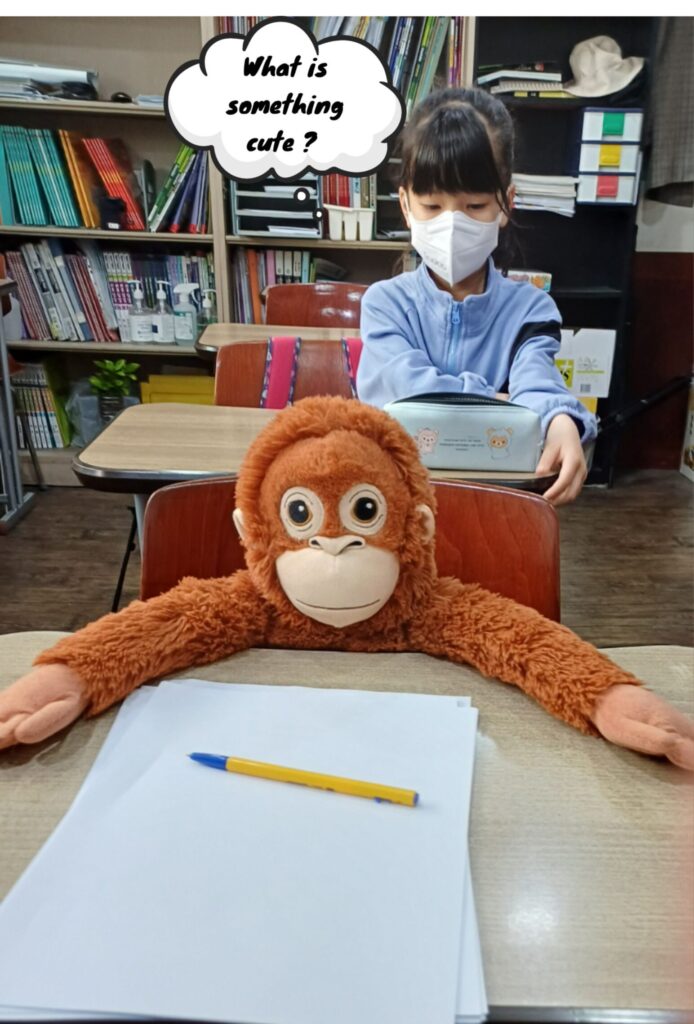
“Ooh! Ooh!“
There are two methods to teach and learn English adjectives in the classroom: boring and fun. The boring method involves students rote-learning long lists of adjectives, usually with the aid of a picture that links them to a noun. Zzz🥱. So, the fun way of using a mix of exercises and games is the way to go. Variety is the spice of a good ESL class, so here are five exercises to engage your younger students.
👨🏽🏫Note: Adjectives in English principally occur in two ‘positions’. Adjectives in front of a noun are described as being in the attributive position, and adjectives after the noun are described as being in the predicative position. For example:
I have a cute monkey (attributive position)
My monkey is cute (predicative position)
When teaching adjectives, I first teach the attributive position and embed it into the students’ language structure through practice. Then I will introduce the predicative position in further lessons.
1. Finding Adjectives in the Classroom
👨🏽🏫Practicing adjectives using tangible objects (realia) is a good idea, and what better way to start than with objects in the classroom?
The teacher begins the exercise by modeling a question and a target answer on the board:

Next, the teacher looks around the classroom, chooses an object, and secretly notes it down. The teacher instructs the students to look around and asks the question:
‘In this classroom, can you tell me something old ?’
The students look around the classroom searching for and calling out ‘old’ objects. Here are a few examples of answers my students recently gave me:
‘an old desk’, ‘an old book’, ‘an old eraser’, ‘an old teacher‘😥
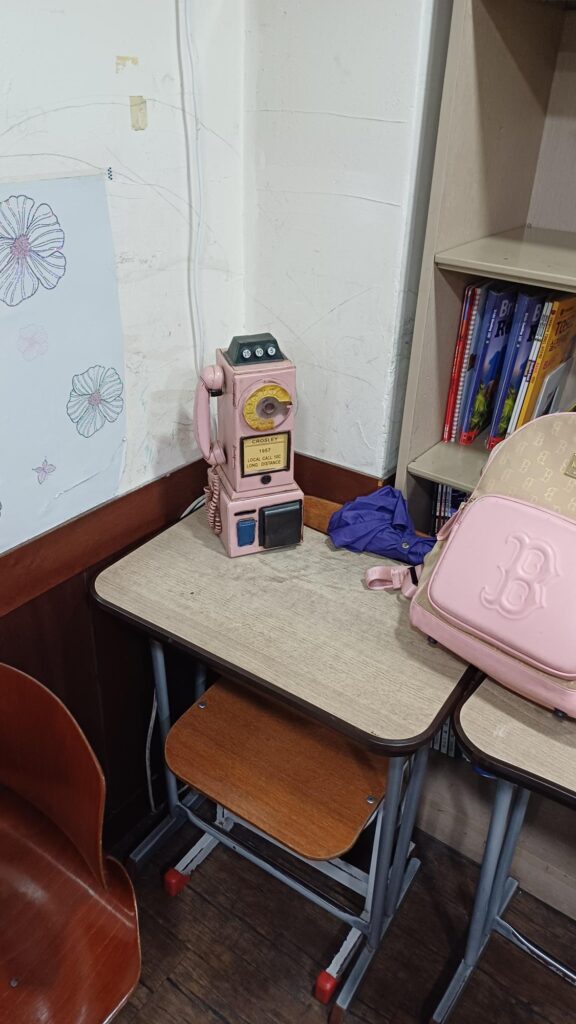
-Eventually, a student will correctly guess the object the teacher has chosen.
‘an old phone‘
-The teacher shows their note to the class, and the student gets a point.
-Once the students become familiar with the exercise, the teacher steps back and lets them take over running it themselves.
2. Mime the Adjective
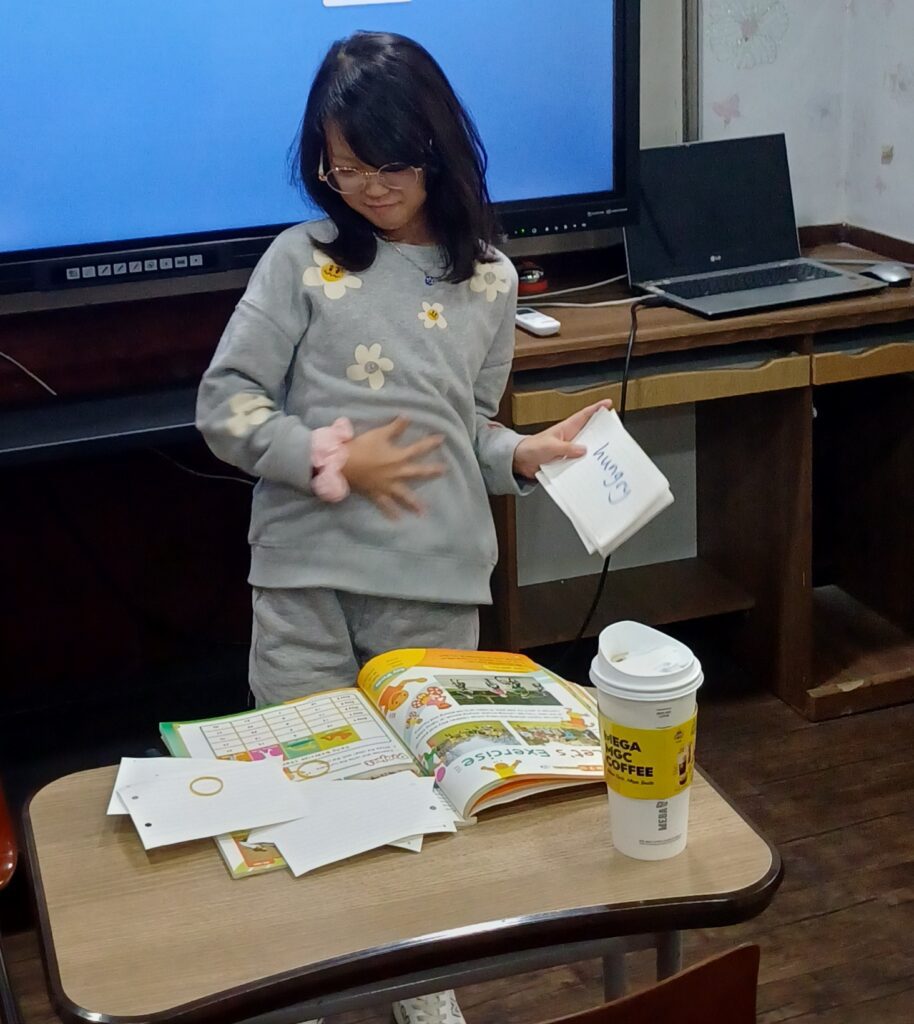
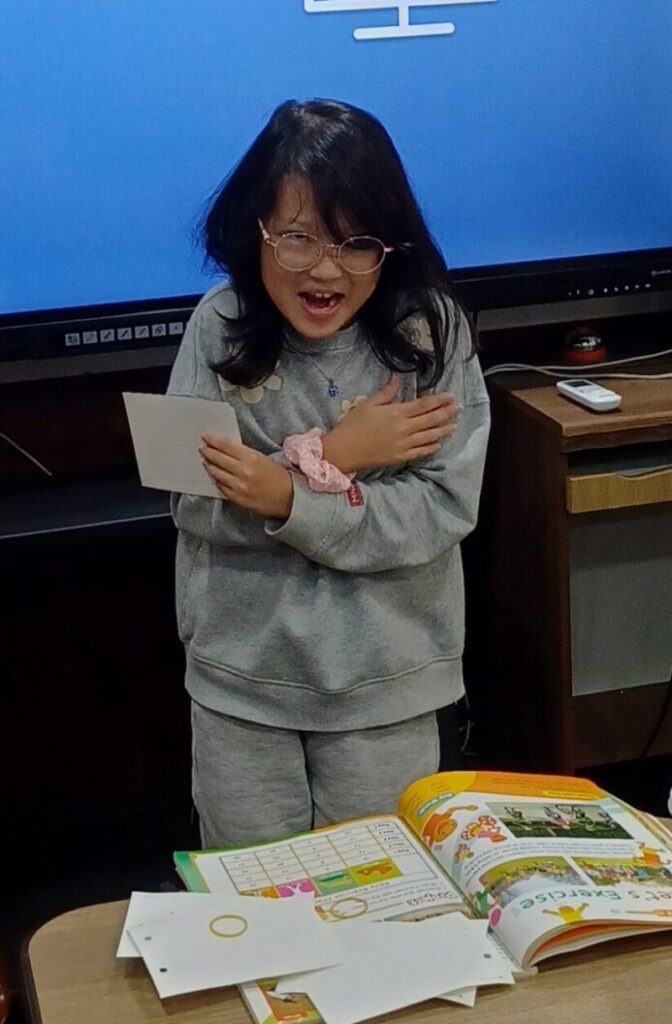
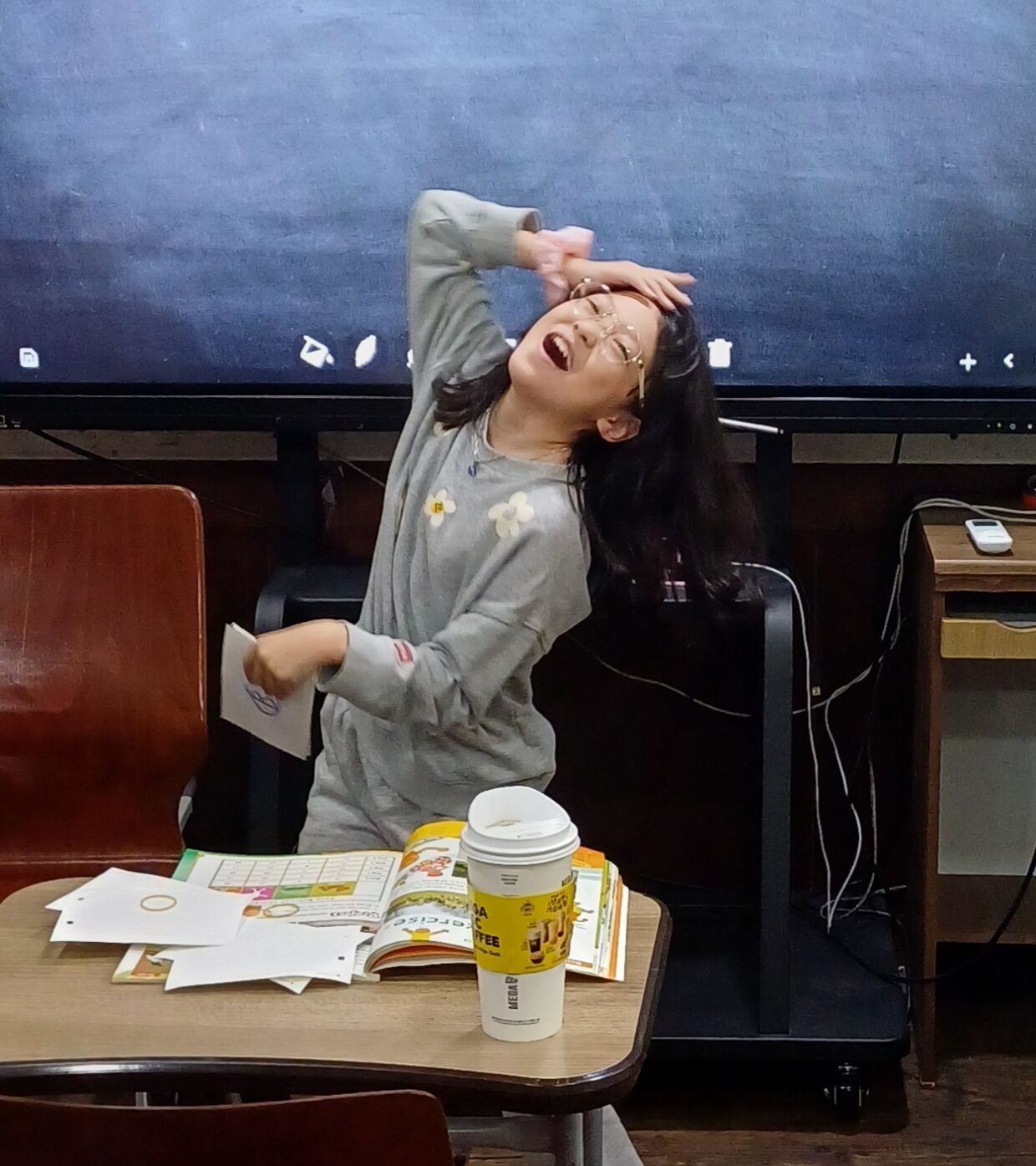
👨🏽🏫This simple exercise is enjoyable for younger students, and you will likely receive numerous requests to repeat it.
The teacher prepares for the exercise by writing down about 20-30 recently learned adjectives on cards.
To start, one student comes to the front of the class.
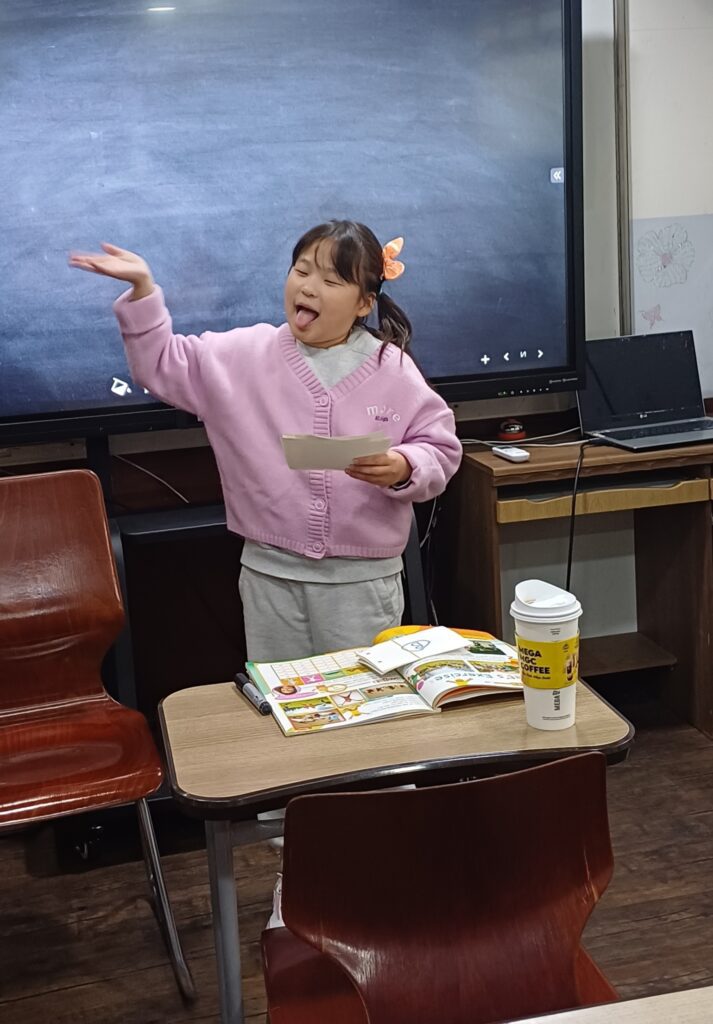
-The teacher shows the student an adjective written on a card.
-The teacher checks the student’s understanding of the word.
-The student has to mime out the meaning of the adjective to the class.
-The first student to guess the mime correctly gets the next turn to do a mime.
(I think she’s thirsty)
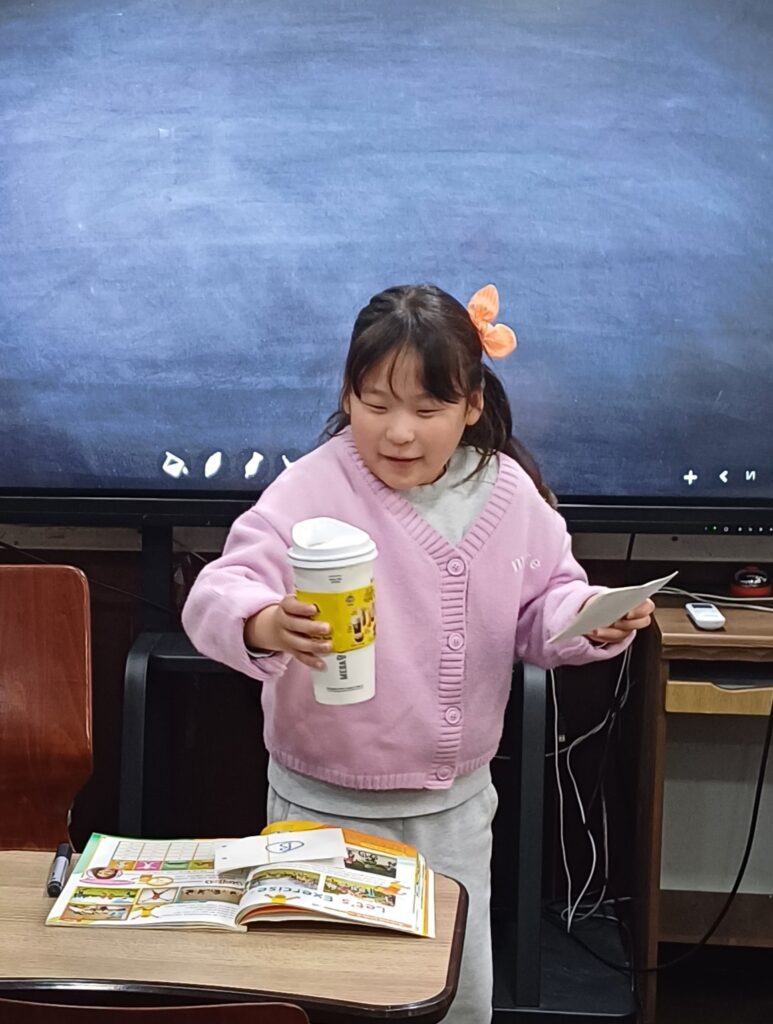
-The exercise can be turned into a team game usefully. One student is nominated to mime.
-The teacher hands the student a list of adjectives, and the team has to guess as many mimes as possible within a set time (I usually list a few easy ones at the beginning to get some points on the board and some slightly more challenging ones at the end).
(Using my coffee…now that’s just cheating!)
3. Sketching Adjectives
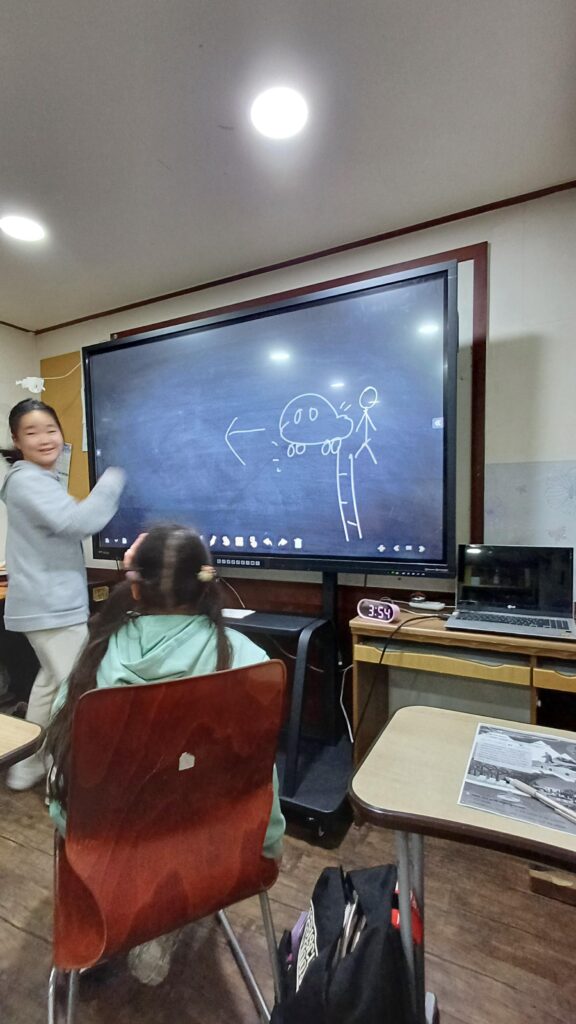
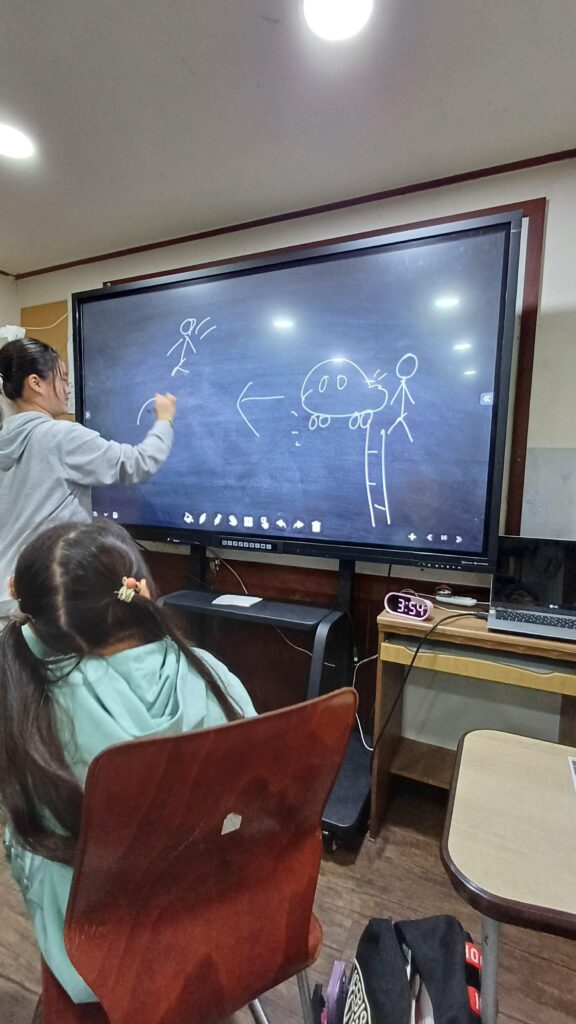
👨🏽🏫I love drawing and am happy to stand at the board sketching pictures for the whole lesson. Of course, it’s better to involve the students as much as possible, so after a few examples, I reluctantly hand over my marker pens and let this become a student-centered exercise.
-The teacher prepares for the exercise by writing down about 20-30 recently learned adjectives on cards.
-To begin the exercise, one student stands at the board, and the teacher shows them a card.
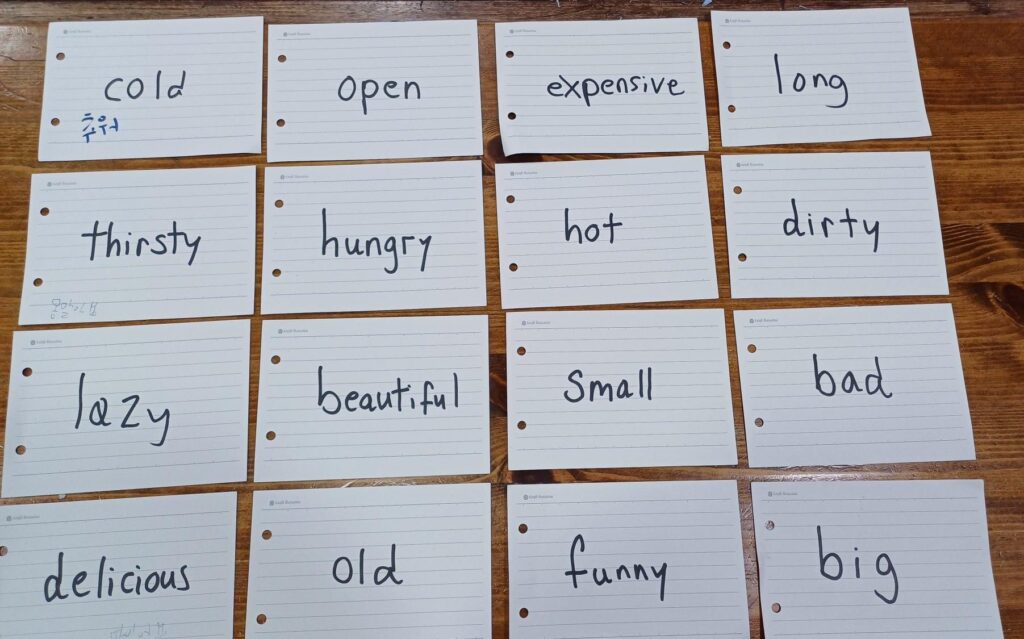
-The teacher checks that the student understands the adjective written on the card.
-The student then describes the adjective by sketching a picture that reflects it, which the other students must guess.
-The first student to guess the adjective correctly from the sketch gets to stand at the board, and so on.
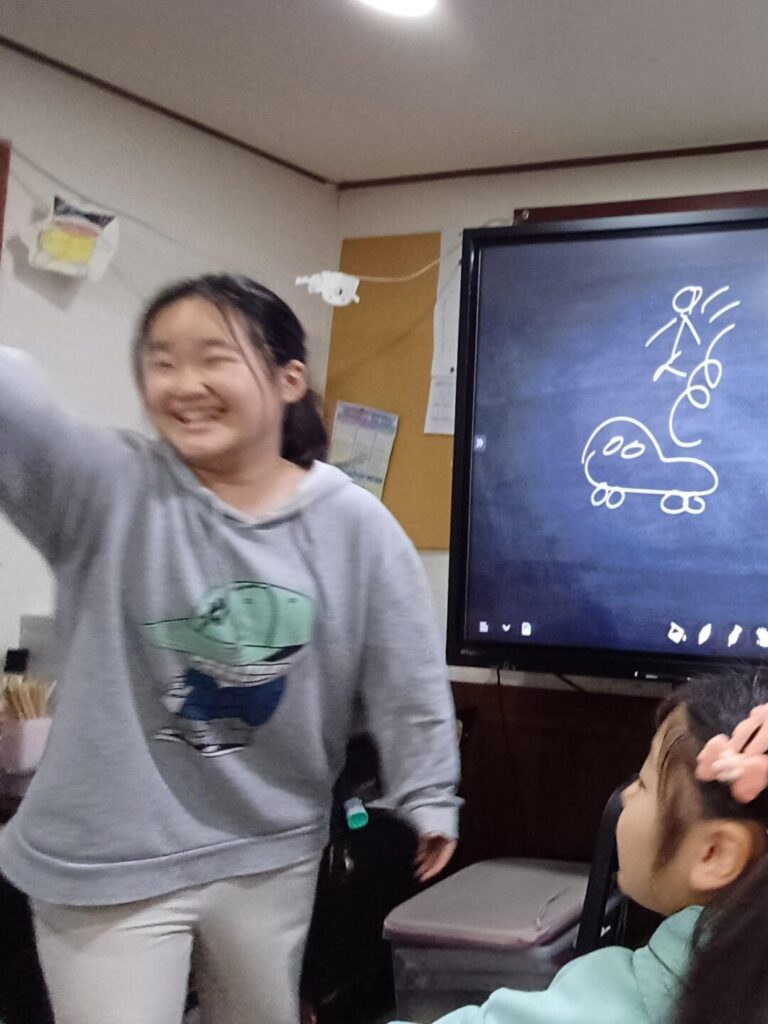
Students enjoy this exercise, especially when the student at the board is hopeless at sketching!
(If you were wondering, she was trying to sketch ‘dangerous’, and she couldn’t believe someone had gotten it correctly!)
4. Alphabet Adjectives
👨🏽🏫This is a terrific way to practice simple adjectives in the classroom. For this exercise, each student has to remember a growing shopping list of items, including an adjective that describes each item, and then add one more thing to the list.
(As a bonus, it also gives the students practice using the indefinite article (‘a/an’) and single and plural nouns.)
To start
The teacher writes out the alphabet in the center of the board. Two blanks precede each letter. Like this:
__ __ a,__ __b,__ __c,__ __d……….
-At the top of the board, the teacher writes out :
‘Last week I went shopping and I bought …‘
-First turn: The teacher asks a student to read the sentence aloud and then points to the letter ‘a’. The student thinks of an item beginning with ‘a’ and completes the sentence. Like this:
(They always choose ‘apple’!)
-Second turn: The teacher then asks the next student to repeat the sentence, but this time to include an adjective before ‘apple’ AND to add an item beginning with ‘b’. Like this:
(They always choose ‘banana’!)
-Third turn: Now the students will start to understand the process. The next student can continue by adding an adjective for the banana and an item beginning with ‘c’. Like this:
The teacher can now step back and monitor as the students take turns adding one item for each letter and an adjective to the previous item. The students will aim to complete the whole ‘alphabet shopping list’. For the final turn, I get all of the class to complete the ‘z’ together. It’s a team effort!
This exercise is most effective for classes of 4 to 8 students. In this way, each student has several turns.
The students often choose items that certainly wouldn’t be on my shopping list, but they find it fun to buy more ridiculous things. As long as they come up with suitable adjectives for their choices, that is fine with me.
The exercise can take up to 45 minutes from start to finish and may run over the scheduled class time. In this case, I take a screenshot of the board so that students can continue from where they left off in the next class.
5. Opposite Adjectives
👨🏽🏫Many adjectives have a precise opposite, so practicing them together is an effective way to learn two at once. Once the students understand what they must do in the exercise, I hand over the running of it to a ‘referee student’. It then becomes a student-only exercise. Then I can sit back, monitor, and think about my lunch 🌮.
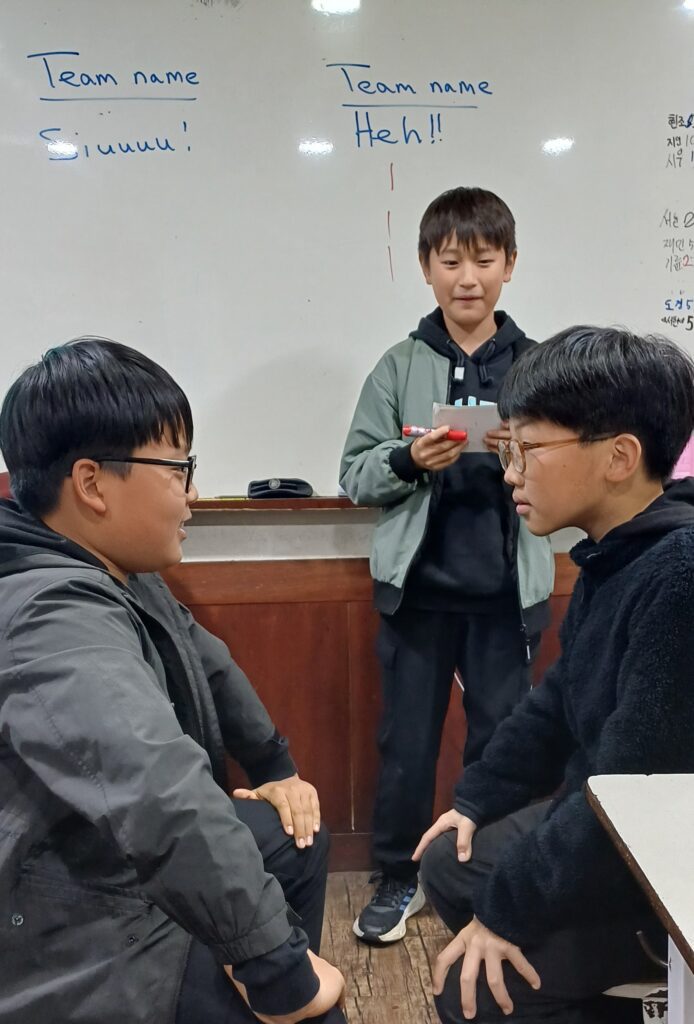
-To play this game, the teacher prepares pre-written cards showing pairs of opposite adjectives that the students have already learned.
-The teacher divides the class into two teams of roughly equal ability.
-One student from each team comes to the front of the class and sits face-to-face with the opposing student.
The teacher (or referee student) then calls out one adjective from the card, and the first student to call out the correct opposite written on the card gets a point for their team.
Because they are face-to-face, the students try to make each other lose concentration. The teacher (or student) can increase the tension by making them wait before calling out the adjective.
After each team member has had a few tries, the exercise is over, and the teacher tallies the scores to determine the winning team.
…………………………………………………………………………………………………………………………………
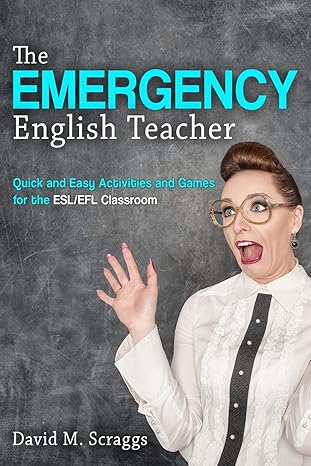
*If you and your students had fun with these activities, check out my book,
The Emergency English Teacher is packed with engaging activities for all student levels. It helps fill up that dreaded time at the end of a lesson.
……………………………………………………………………………………………………………………………………………………………………………………………………………………………………………
Now that the students have had practice in using simple nouns and adjectives, it’s time for them to describe their own rooms using prepositions of place.
